Milan has become one of Europe’s most reliable convergence points for high-potency active pharmaceutical ingredient (HPAPI) decision-makers. Its proximity to Northern Italy’s API and CDMO clusters, strong regulatory footprint and established conference infrastructure make it a natural meeting ground for organisations operating at the sharp end of high-potency manufacturing.
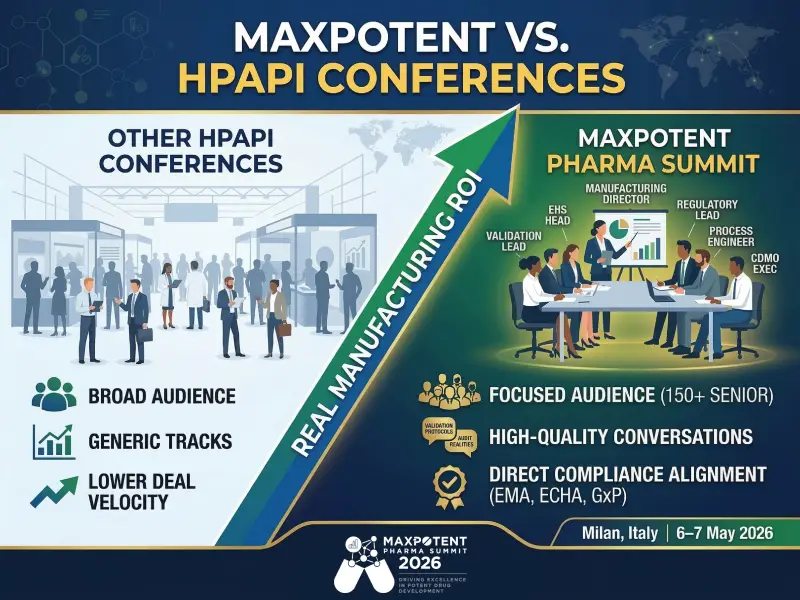
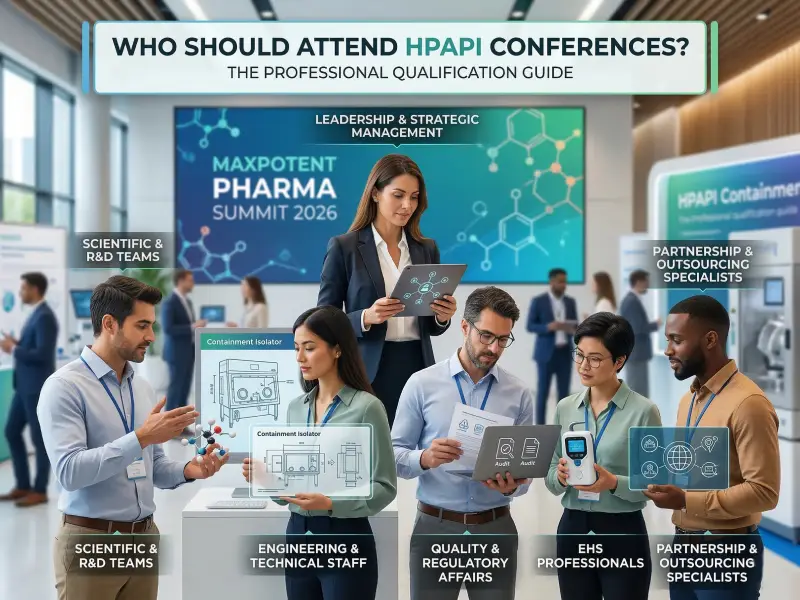
For organisers, sponsors and exhibitors, understanding who attends HPAPI conferences in Milan matters more than raw delegate numbers. The real value lies in the type of companies present, the roles they send and the decisions those individuals influence.
This article outlines the top categories of companies that typically attend HPAPI conferences in Milan, with representative examples, and explains why Milan consistently attracts this calibre of audience.
Why Milan Attracts High-Value HPAPI Conference Attendees
HPAPI conferences are not generic pharma events. Attendance is driven by operational urgency rather than brand visibility. Milan’s appeal stems from three structural factors.
First, Northern Italy hosts one of Europe’s densest concentrations of API manufacturers and high-containment CDMOs. Second, the region has deep expertise in engineering, isolator design and containment systems. Third, Milan is easily accessible for pan-European leadership teams, making it a practical meeting point for cross-border programmes.
As a result, HPAPI conference attendees in Milan tend to be senior, technically informed and commercially accountable.
7 Must-Watch HPAPI Conference Attendees Milan (2026)
Global Pharmaceutical Innovators with HPAPI Pipelines
Large pharmaceutical companies with oncology, hormone and specialty small-molecule pipelines are among the most consistent attendees.
These organisations attend not to learn fundamentals, but to:
- Benchmark containment strategies
- Evaluate outsourcing partners
- Validate scale-up and lifecycle decisions
Typical attendee functions include CMC leadership, manufacturing science heads and technical operations directors, rather than early-career roles.
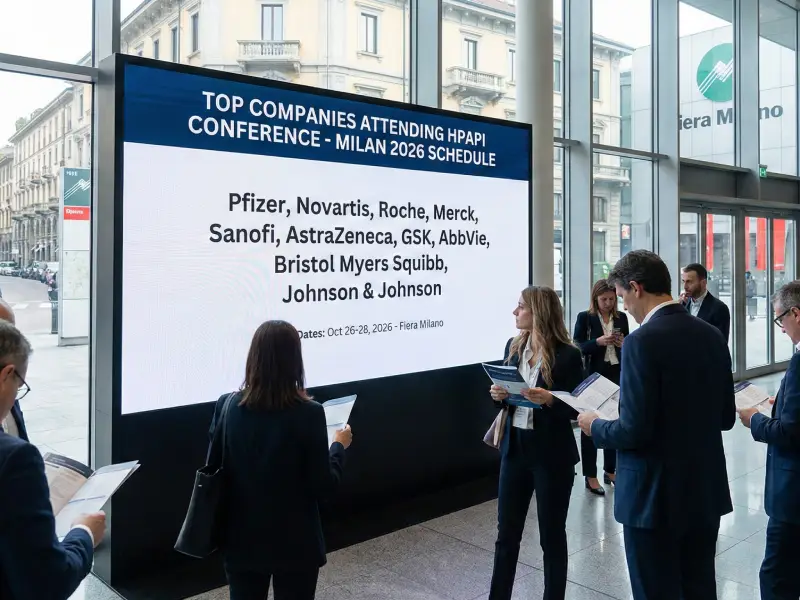
Representative examples (non-exhaustive): Roche, Novartis, Pfizer, AstraZeneca, Bayer
Their presence raises the strategic level of conversations and signals serious buying intent to solution providers.
Specialised HPAPI CDMOs and Contract Manufacturers
Perhaps the most influential group at Milan HPAPI conferences are contract development and manufacturing organisations (CDMOs) with dedicated high-potency capabilities.
These companies attend to:
- Position their containment infrastructure
- Signal readiness for late-phase and commercial HPAPI programmes
- Engage directly with sponsor companies under active evaluation
Northern Italy–based CDMOs are particularly visible, but conferences also attract global players seeking European partnerships.
Common attendee profiles include site heads, business development directors and technical sales leaders—people empowered to move discussions forward.
API and Intermediate Manufacturers
API producers involved in potent compounds attend Milan conferences to address one core issue: risk concentration during scale-up.
High-potency APIs introduce challenges around:
- Occupational exposure limits
- Powder handling and transfer
- Multi-product facility contamination risk
API manufacturers attend to align with downstream expectations and to explore collaborations that reduce lifecycle risk.
These companies often send process development heads, plant directors and regulatory leads, ensuring discussions remain grounded in execution realities.
Containment, Isolator and Engineering Solution Providers
Containment technology providers are among the most visible and strategically engaged HPAPI conference attendees in Milan.
This category includes companies specialising in:
- Isolators and glovebox systems
- Contained powder transfer technologies
- Engineering design for high-potency facilities
Their objective is not brand awareness alone. These conferences offer rare access to end-users actively planning upgrades, retrofits or new HPAPI lines.
Conversations tend to move quickly from capability to deployment timelines.
EHS, Industrial Hygiene and Risk-Assessment Specialists
HPAPI operations raise worker-safety stakes significantly.
As a result, conferences in Milan attract:
- Industrial hygiene consultancies
- Exposure monitoring specialists
- EHS solution providers
These attendees contribute depth to technical discussions around SMEPAC testing, OEL interpretation and long-term exposure control strategies.
Their presence also reflects growing regulatory scrutiny across Europe.
Quality, Compliance and Regulatory Advisory Firms
Regulatory interpretation is not uniform across HPAPI facilities.
Conferences in Milan consistently draw:
- GMP consultants
- Quality systems specialists
- Regulatory advisory firms
They attend to exchange insights on inspection trends, data integrity expectations and containment-related observations—areas where HPAPI facilities often face heightened scrutiny.
Equipment OEMs Beyond Core Containment
Not all relevant technology sits within isolators.
HPAPI conferences in Milan also attract OEMs specialising in:
- Tablet compression under containment
- Contained milling and blending
- Automated dispensing and weighing
Their participation reflects the industry’s shift towards end-to-end containment rather than isolated controls.
Why This Audience Mix Matters for Organisers and Sponsors
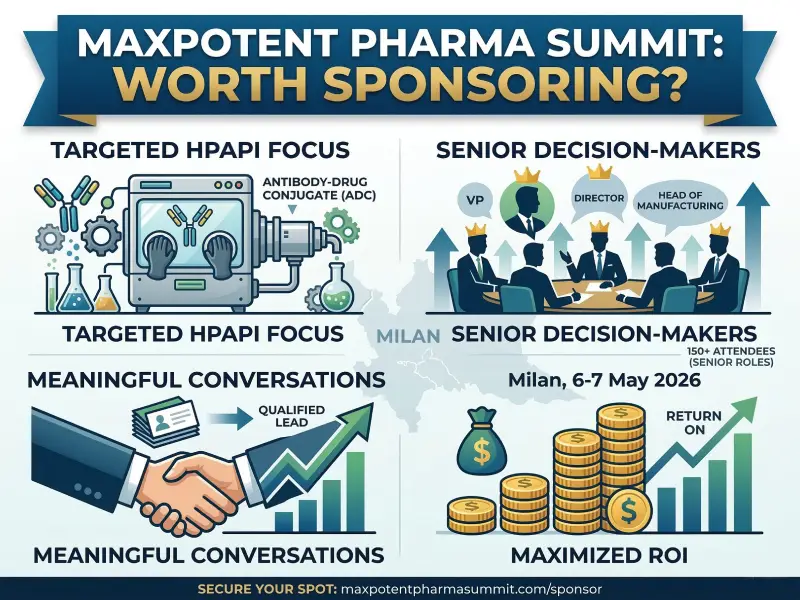
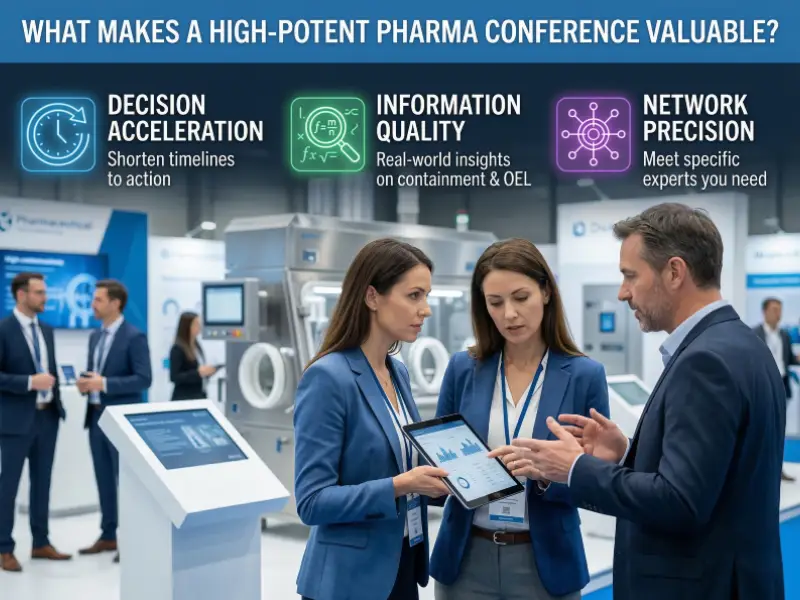
The real value of HPAPI conference attendees in Milan lies in decision density.
These events bring together:
- Buyers with active projects
- Sellers with validated solutions
- Advisors shaping compliance outcomes
For sponsors and organisers, this means fewer conversations—but far more consequential ones.
Wrapping Up
HPAPI conferences in Milan attract a specific, high-value audience shaped by operational risk, regulatory pressure and commercial urgency.
Understanding who attends—and why—helps sponsors, exhibitors and organisers design experiences that enable real outcomes.
For ConvoAlign, this clarity is foundational: conferences succeed not by scale, but by alignment between audience, agenda and decision-making authority.

Anwesha Mishra
Anwesha Mishra is a B2B SaaS writer with a foundation in poetry and a deep appreciation for literature across genres. She believes in the quiet power of words and strives to bring clarity and depth to everything she writes.